IUCN/SSC Otter Specialist Group Bulletin

|
©IUCN/SCC Otter Specialist Group Volume 29 Issue 1 Pages 1 - 67 (January 2012) Citation: Ullah, I., Noureen, U., Arshad, M. and Jadoon, W. (2012). Factors Influencing Distribution of Eurasian Otter (Lutra lutra) in Swat and Dir Districts, Pakistan. IUCN Otter Spec. Group Bull. 29 (1): 24 - 33 Factors Influencing Distribution of Eurasian Otter (Lutra lutra) in Swat and Dir Districts, Pakistan Imran Ullah1, Uzma Noureen2, Masood Arshad1 and Waqar Jadoon1
1The Ministry of Environment's Pakistan Wetlands Programme Islamabad, Pakistan |



 |
| Received 8th January 2012, accepted 2nd March 2012 |
| Abstract: This study assessed the distribution of Eurasian otters (Lutra lutra) through community-based survey followed by their potential habitat investigation in two districts of Khyber Pukhtoon-khwa (KPK), Pakistan. Results of the study indicated that Sheer Palam, Tormang, Patrak, Kalkot and Tal (Upper Dir), Madyan, Baronial, Mankial and Peshmal (Swat) are the key habitats to host Eurasian otters. Secondary data (community questionnaires) indicated 79% people consider that Eurasian otters are permanent residents in the study area, 12.5% thought otters were seasonal migrants while 8.5% people were not able to report otter status. Of the 31 sites surveyed, only nine sites were found to be positive for otter presence. The results indicated that the distribution range of the otter covers some potential areas of Swat and Upper Dir in Pakistan. This study concludes that otter population is more vulnerable in areas of dense human population. Anthropogenic activities are greatly influencing the presence of otters in the region and thus need an immediate action for the recovery of this declining population. |
| Keywords: Eurasian otter; distribution; population status; community based surveys; Pakistan |
| Française | Español |
INTRODUCTION
Otters belong to the mammalian family Mustelidae (Subfamily Lutrinae), and are adapted to semi-aquatic life (Hussain, 1999; Macdonald and Duplaix, 1983). Among several otter species, the Eurasian otter (Lutra lutra) has the widest distribution with a range covering parts of three continents; Europe, Asia and Africa (Reuther et al., 1993). The Eurasian otter’s geographical range is enormous, larger than the remaining other 13 species. It inhabits Europe, North Africa, Russia, China, Japan, Indonesia, Malaysia and parts of India and Pakistan (Mason and MacDonald, 1986), although it has disappeared from several areas of its historical range due to anthropogenic activities as competition for fish, fur trade, killing and habitat loss etc (Saavedra, 2002). Otters are semi-aquatic mammals because they carry out most of their activities in water, but reproduction and resting happen on land like other terrestrial mammals (Chanin 1985, Hussain et al., 2008; Mason and Macdonald, 1986). They are also recognised as one of the top predators of freshwater ecosystem (Kruuk et al., 1994; Lekagul and McNeely 1977; Ottino and Giller, 2004) and key species in the wetland ecosystem (Mason and MacDonald, 1986).
Distribution status of Eurasian otter in Pakistan
Pakistan hosts two species of otters: the Eurasian otter (Lutra lutra) and the Smooth coated otter (Lutrogale perspicillata). The Eurasian otter is distributed in the northern mountainous region of Khyber-Pukhtoonkhwa (KPK) province while the Smooth coated otter occurs in the Sindh and Punjab provinces of Pakistan (Khan et al., 2009). The wetlands and rivers of Pakistan provide suitable habitat for the Eurasian otter. It is known to be found in rivers and streams of the Himalayan mountain range in KPK-Pakistan (Khan et al., 2009). The Eurasian otter is distributed in the northern valleys of Swat, Chitral, Kohistan and Gilgit Baltistan in accessible river areas (Roberts, 2005). Otter tracks have been seen along the Shyok River in Baltistan, Ghizer River in Gilgit, Kunhar River in Chitral and on the banks of the Hunza River (Roberts, 2005; Hess, 1993). Fur trade of the Eurasian otter is common in northern regions of Pakistan and thus skins of Eurasian otters reach as far as Peshawar and Rawalpindi from the Jhelum and Neelum valleys of Azad Kashmir and the Hunza District of Gilgit Baltistan. The main aim of this study was to build baseline information on the otters' past and current status, to map the distribution range and potential habitats and to evaluate the factors influencing their distribution.
MATERIALS AND METHODS
Study Area
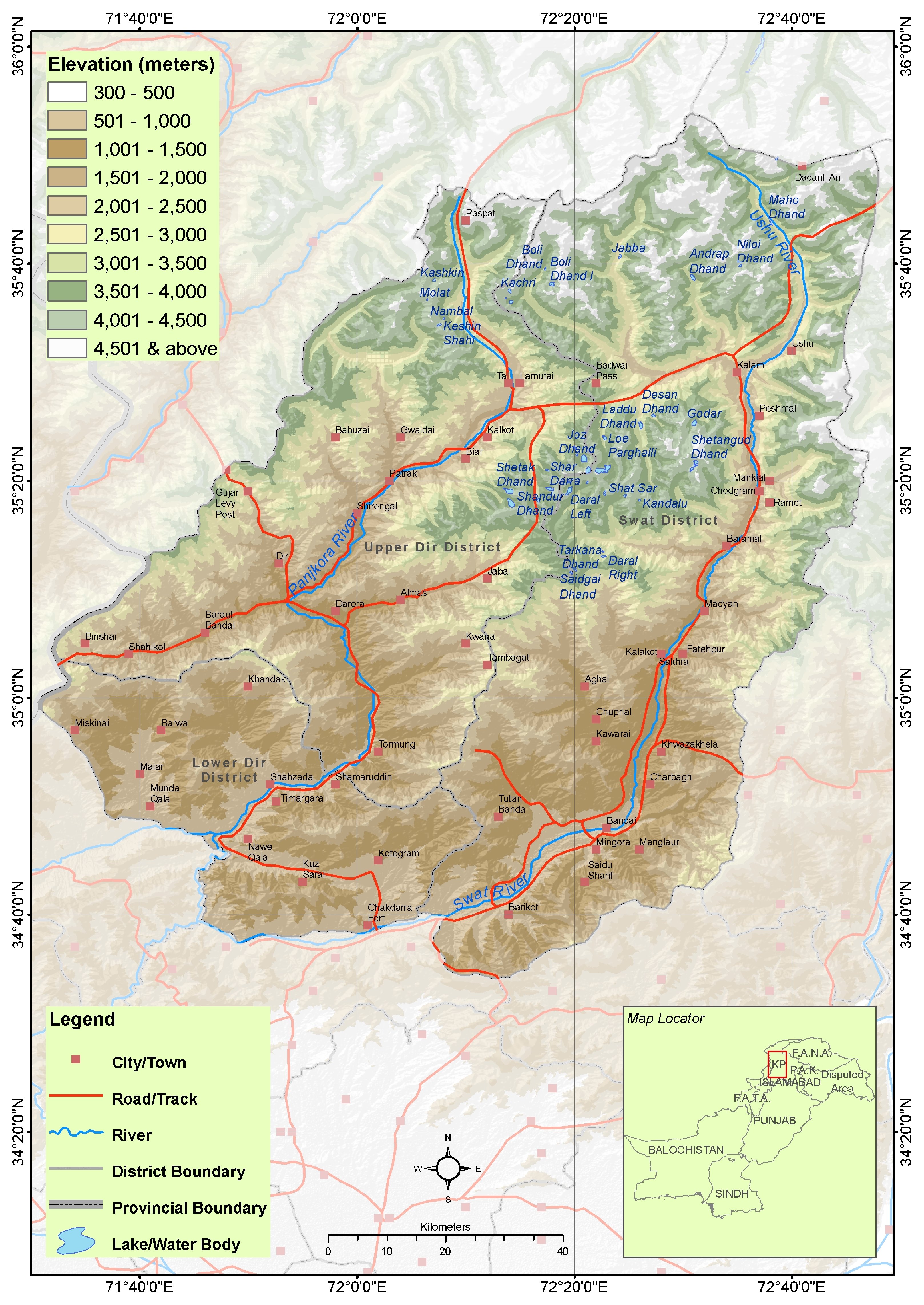
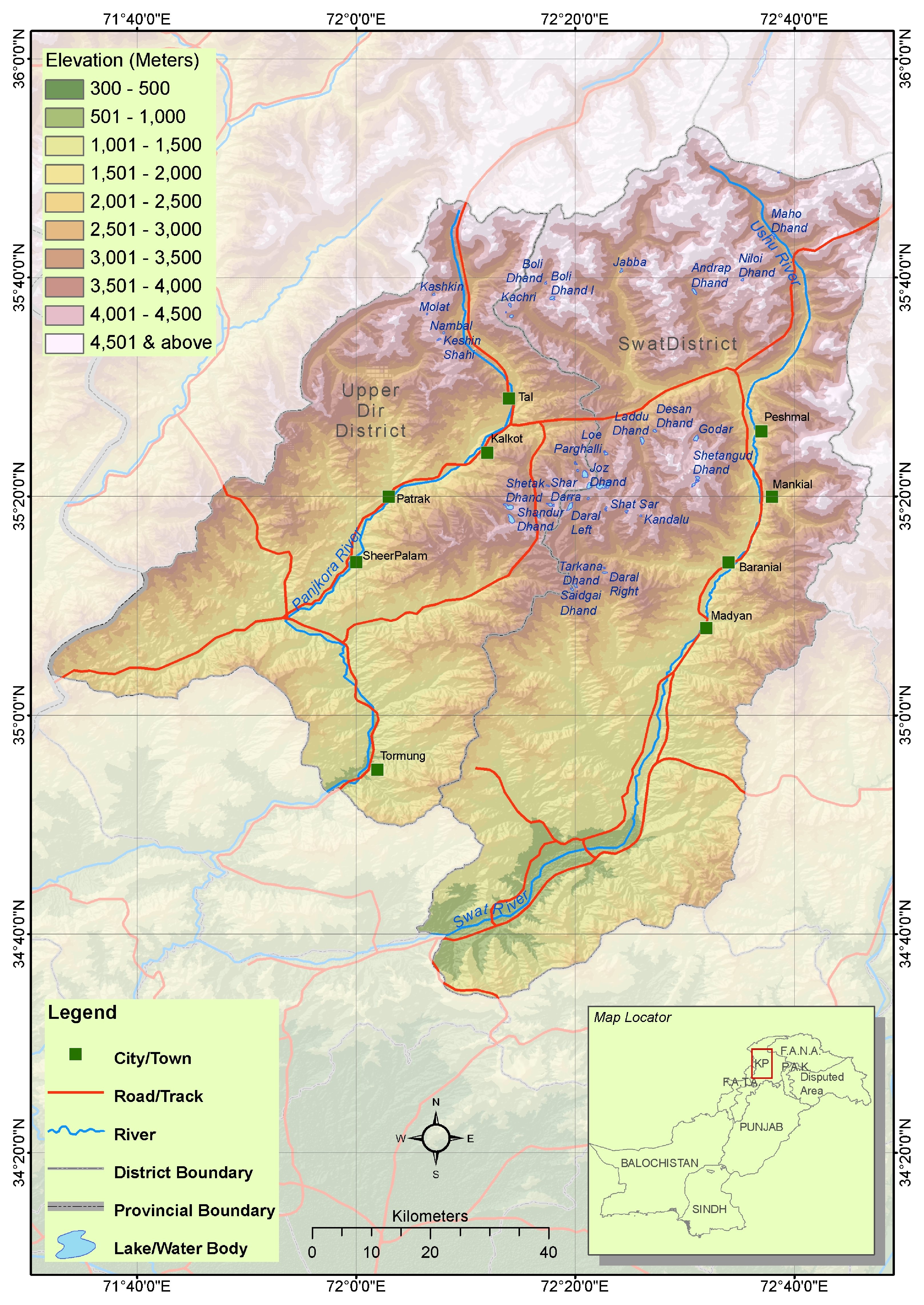
The study area in the Swat and Dir Districts are situated in Khyber-Pukhtoonkhwa (KPK) Province of Pakistan. This region represents diverse habitats and geographic features from rivers and streams to cultivated and uncultivated lands, to forested and semi-forested areas and mountain ranges. These are contiguous valleys in KPK (Figure 1). These districts are naturally gifted areas of fascinating landscapes and clear healthy climate located in the middle of foothills of the Hindu Kush mountain range. The climate of KPK varies enormously for a region of its size, covering most of the many climate types found in Pakistan. In the districts of Dir and Swat, the climate becomes more typical of Pakistan as a whole, although a significant amount of the annual precipitation still comes from anterior clouds through the winter months. Dir is one of the wettest places in Pakistan: annual rainfall at Dir averages 1475 mm (58 inches), of which 400 mm (15.75 inches) falls during the summer monsoon from July to September and twice that amount during the winter rainy season from December to April. Swat, which is rather more sheltered, has an average annual rainfall of around 840 mm (33 inches), with about 430 mm (17 inches) expected between June and September.
 |
|
Figure 1.
Map of the study area of (Swat and Dir) in Khyber-Pukhtoonkhwa (KPK), Province of Pakistan (click for larger version) |
Evaluation techniques
Indirect evaluation techniques were used to assess the distribution of Eurasian otter by following the standard guidelines for otter distribution surveys (Reuther et al., 2000). The sites were considered “positive” when at least a single otter sign was recorded and “negative” when no otter sign found. The percentage of these positive and negative sites was considered on the basis of total sites visited. During the current study, indirect methods were categorized into two broad categories which include interviews with local community and field observations.
Community-based assessment of Eurasian otter
A survey questionnaire was developed and meetings were arranged with different professionals including fishermen, hunters, fish traders, fish farmers, local communities, and representatives of government line departments; (irrigation, fisheries, and wildlife) regarding otter distribution. A total of 253 people were interviewed from abovementioned local communities in the districts of Dir and Swat. At each site local community and concerned government authorities were interviewed to assess the presence of, and identify the key threats to otters. Before conducting each interview, it was confirmed that the person could really recognise otters by showing them pictures of the Eurasian otter. The feedback from the local communities was used to compile information on the presence and absence of otters in the particular vicinities.
Field survey
A total of 39 potential sites along the main river in KPK were marked on a GIS based map. These potential sites were identified based on the recent observations of community-based assessment which includes a questionnaire survey and different professionals including fishermen, hunters, fish traders, fish farmers, local communities, and representatives of government line departments; (irrigation, fisheries, and wildlife). Among 39 potential sites, 31 sites were extensively searched for the existence of Eurasian otters in KPK while eight sites were not searched due to unfavorable conditions: rough terrain and war. The investigation for the presence of L. lutra was conducted using Jeeps and on foot by walking along the banks of water bodies. Otter distribution was assessed by means of a standard otter survey (Mason and Macdonald 1986 and Reuther et al., 2000), which is based on field observations by taking 600 meter transects after every 5-8 kilometers stretch at regular intervals. Both the Districts were extensively searched for signs of Eurasian otters and transects were laid by utilizing the information obtained from local community regarding potential habitats in the area; due to the rough terrain and risky law and order situation, it was not possible to take 600 m transect at every 5-8 kilometer stretch at regular intervals, so transects were laid randomly at each identified site in light of the secondary data and community-based information. Each site was thoroughly scanned for otter signs i.e. spraints, claw marks, grooming sites, food remains and holt presence. The GPS positions and the description of the type of otter sign wherever found were recorded. At each site, the surrounding habitat, vegetation type, soil texture and land use pattern were also recorded. The spraints were described as recent, old and very old based on their consistency and degree of bleaching (Ottino and Giller, 2004).
RESULTS
The present investigation revealed that the population of the Eurasian otter has declined to a great extent in the catchments region in KPK due to habitat degradation and disintegration, deforestation, un-availability of prey species, flash flooding, increased human population and poaching for fur trade. The present investigation also suggested that the existing otter population is not evenly distributed throughout its historic range and hence it is restricted to limited areas of KPK.
Historical and current distribution of Eurasian otter in Khyber-Pukhtoonkhwa
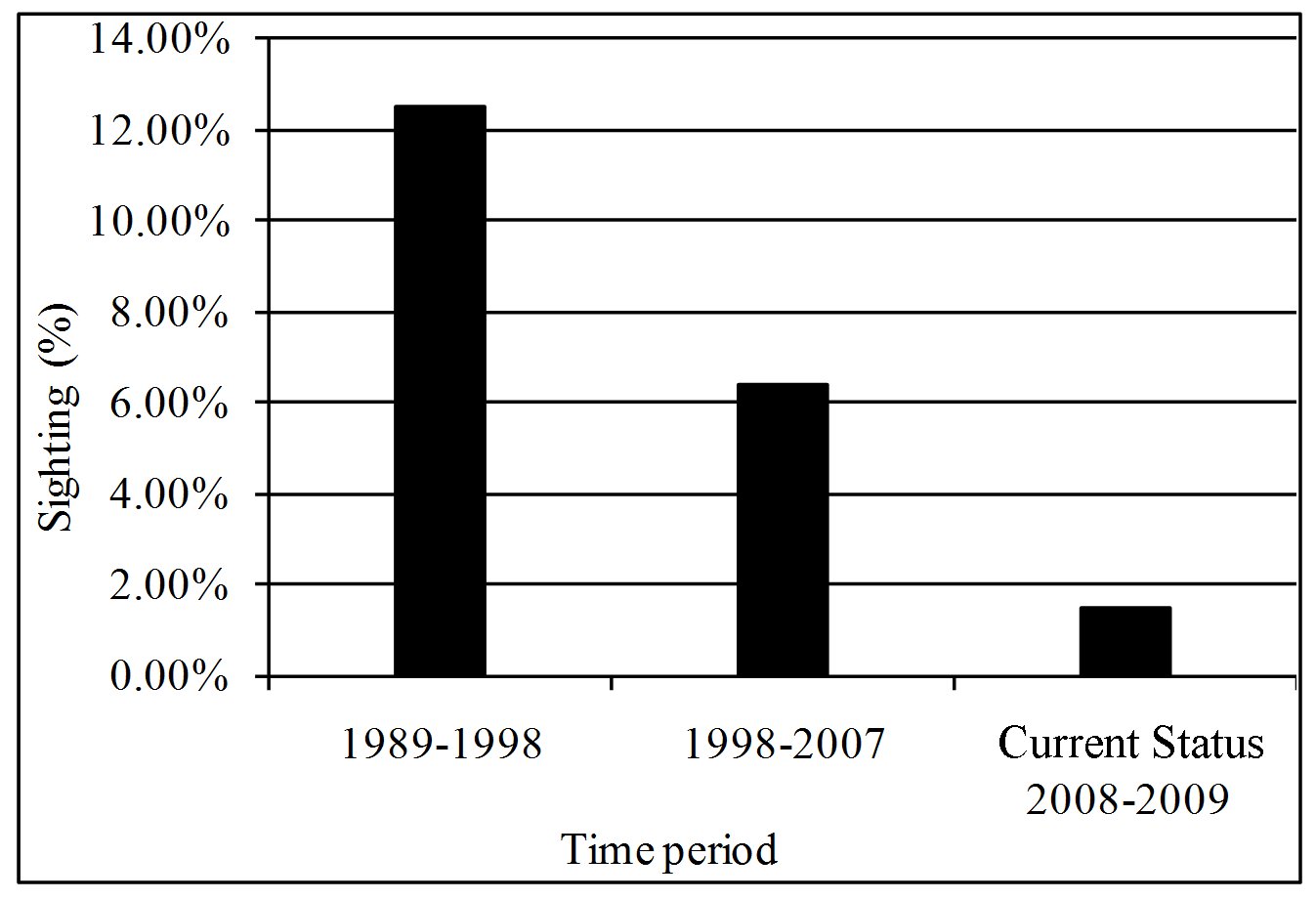
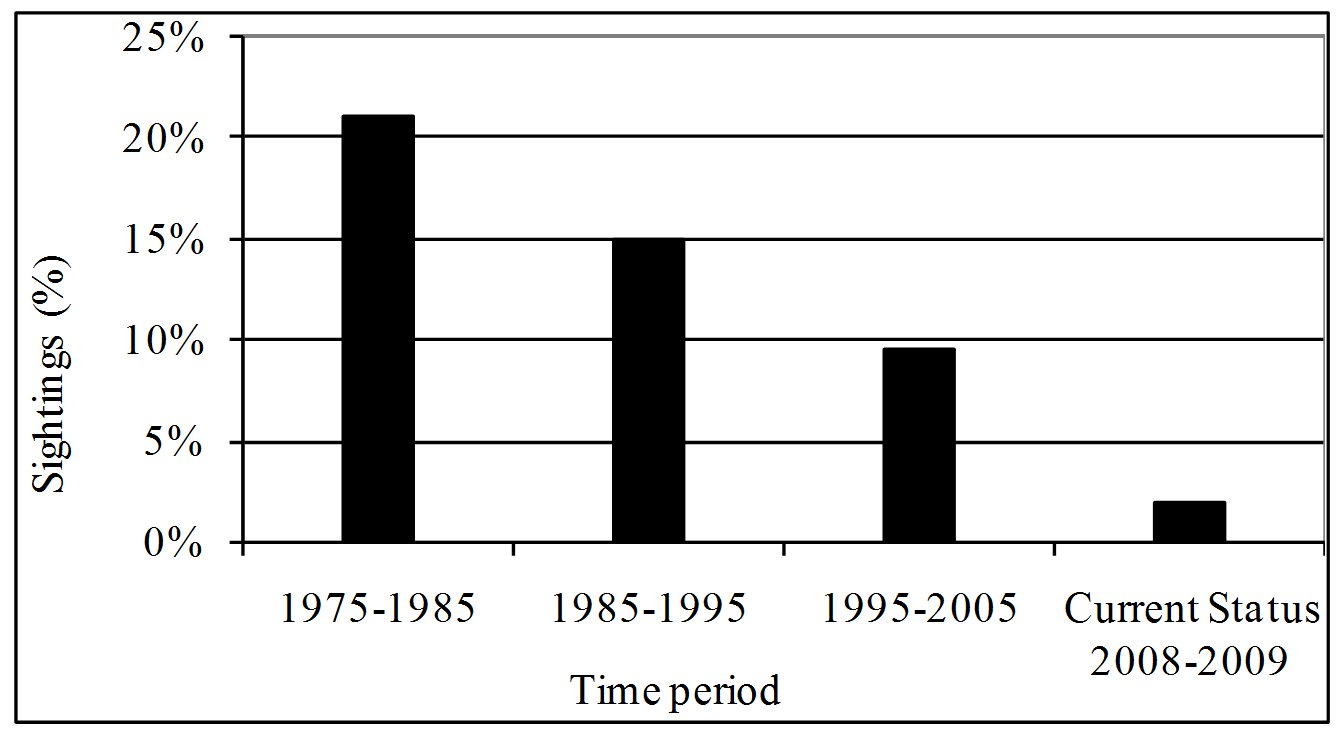
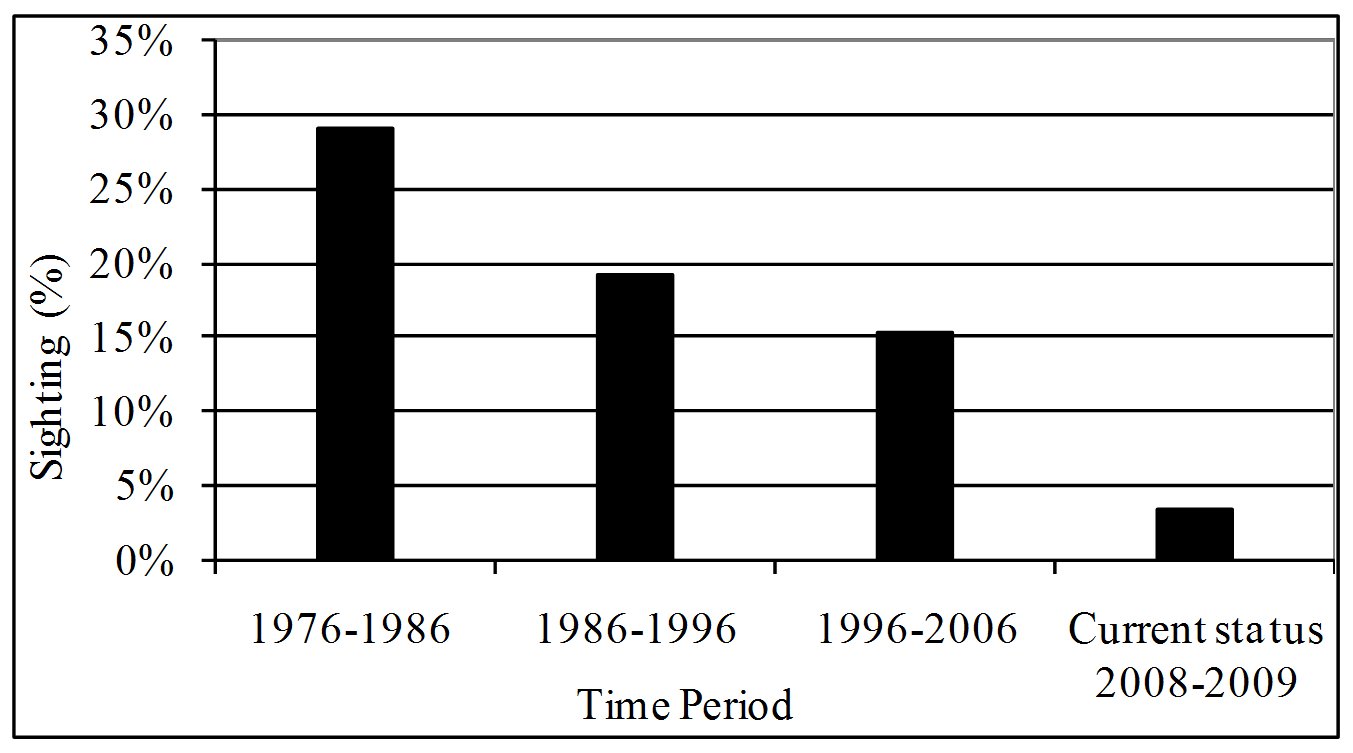
The average responses of people interviewed were categorized on yearly basis (10 years interval) and the historic presence of Eurasian otter in Swat and Dir Districts are given in Figures: 2-4 respectively. The current distribution of Eurasian otter in the study area indicated that 18% of people have seen Eurasian otters within the last three years of the period in the Swat valley. However, 48% people in Upper Dir and 34% people in Lower Dir have observed Eurasian otters within the same time period (Figure 5). Of the total thirty one sites surveyed, only nine sites were found to be positive for otter presence.

The results indicated that the distribution range of the otter covers some potential areas of Swat and Upper Dir which are shown in Figure 6. Secondary data (community questionnaires) indicated 79% people are of the opinion that the Eurasian otter is a permanent resident in the study area, 12.5% considered that the otter is a seasonal migrant while 8.5% people were not able to report its status in the study area. Local communities informed us that otter activities were seen both at night and during the day time. About 47% people observed otter activity in early morning, 37 % people have seen otters at evening while 16 % people reported seeing otters in mid-afternoon. Spraints were well identified along the variously-sized water bodies (main rivers and streams), indicating that an otter population is present in the area. At least 2-3 spraints and 1-2 holts were identified at each positive site. Sites were well worn with holts of various sizes being quantified often at each spot.
Factors affecting population
Results of the survey demonstrated that the otter population in the area has decreased by 49.5 % due to over population and habitat destruction, (37.4%) result recorded that otters were hunted and killed, 3.32 % people highlighted the unavailability of the food, 0.5 % people reported that otters were killed in road accidents while 9.2 % people had no knowledge about their disappearance from the study area. This fact showed that anthropogenic activities influenced the presence of otters in the study area. Among 253 questionnaires, 47.4% people reported that otters are hunted for pelts, 13% confirmed that otters are hunted as competitors for fish, 11.1% people indicated that hunting of otter occurs for domestic use while about 28.5% people denied any sort of hunting of the otter in the area.
DISCUSSION
Information from secondary sources such as forest staff, local people and ex-poachers revealed that Eurasian otters were found in the Swat and Dir districts. Strict legislation, lower levels of human activity and protected bank side vegetation may have been the causes for the continued survival of the species (Jefferies, 1989; Mason and Macdonald, 1986; Acharya, 1998). Indirect signs like spraints, holts, grooming sites and claw marks were investigated for positive otter sites in KPK and hence some areas in Dir and Swat districts were marked positive based on these observations (Figure 6). Indirect signs have been used to assess the otter population, though the reliability of using indirect signs has been doubted in some circumstances. Our results are comparable to those found in the investigations conducted by Kruuk (1995), Mason and Macdonald (1993) and Strachan and Jefferies (1996), in that the compiled results of local community responses indicate that the otter population has been decreasing significantly in these areas with the passage of time (Figure 2, 3 and 4). According to the local community, hunting of otters as a fish competitor has been a prevailing cause of decreasing populations of Eurasian otters: Thus humans have posed the greatest threat to otters, both directly and indirectly as discussed by Hussain and Chaudhry (1997) and Lourival et al.(2000). Disturbance to otter habitat was found to be greater in the Swat district compared to Lower Dir, while the habitat of Eurasian Otter was comparatively good in Upper Dir. By relating the anthropogenic activities to the number of otter sightings, it has been observed that the greater the extent of habitat destruction, the lower the number of otters seen in a particular District. These results agree with those obtained by Butler and du Toit, 1994 and Verwoerd, 1987. Fishing activity was observed to be at quite high levels, and this might have played a crucial role in the dislodgment and disappearance of Eurasian otters from their historic range of distribution as suggested by Kruuk (2006) and Hussain (2002). Human disturbance in terms of fishing and dwelling often affected otters (Butler and du Toit, 1994; Acharya, 2006).
The distribution range of otters covers some potential areas of Swat and Upper Dir; however, the population was sparse in the northernmost areas, where the winter conditions were harsh, which is also discussed by Shrestha, 1997, Prater, 1971 and Ruiz-Olmo et al., 2008 in their studies. In these alpine area, all the waters are totally covered with ice and/or there is very low water availability in winter. In the extreme conditions of alpine regions, it is nearly impossible for otters to find any food in winter. Thus these areas in winter time are the limiting factor for the population of otters as also indicated by the investigations of Sulkava, 2007 and Sulkava et al., 2007. Eurasian otters in KPK province suffered from habitat loss, hunting and killing, unavailability of the food and road accidents, which has left them more susceptible to the disturbances which significantly affect all otter populations. These facts have also been confirmed by other workers (e.g. Anoop and Hussain, 2004; Verwoerd, 1987; Butler and du Toit, 1994; Hussain and Chaudhry, 1997) in their studies.
CONCLUSIONS
This study elucidated the distribution of the Eurasian otter in the Swat and Dir districts of Pakistan. The Eurasian otter is distributed in Sheer Palam, Tormang, Patrak, Kahlakot and Tal which are situated in the valley of the Dir district, while otters were also confirmed in Madyan, Baronial, Mankial and Peshmal located in the Swat Valley. The Eurasian otter population is more vulnerable in areas of dense human population: anthropogenic activities influenced the presence of otters in the study area. These results revealed that there is utmost necessity for future research to ensure better management for otters as well as to find out possible ways of reducing anthropogenic pressure on otter habitat. This indicates a need for immediate action for otter conservation.
Acknowledgements - The authors would like to thank all the public and private sector departments and concerned communities who helped us by providing information about the otters in the area. We are cordially thankful to Mr. Richard Garstang, CTA Pakistan wetlands program for his help and interest in otter conservation in Pakistan. We are also thankful to Waseem Khan, Coordinator Environmental education WWF Pakistan for his valuable information he shared. We extend our gratitude to Syed Mohammad Raza Shah, GIS Analyst NCCW, Pakistan Wetlands Program for preparing the maps for field studies and report. We acknowledge the financial support provided by Pakistan wetlands Programme (WWF-P) Islamabad.
REFERENCES
Anoop, K.A., Hussain, S. A. (2004). Factors affecting habitat selection by smooth-coated otters (Lutra perspicillata) in Kerala, India. J. Zool., Lond.263: 417-423.
Acharya P. (2006). Otter and wetland conservation in Nepal.In: Rimal N.N. (ed.)Water Resources, Security and Sustainability, SEEP Water, Kathmandu, Nepal.144-149
Acharya, P.M., Rimal, N. (2007). Sustainability: human-well being and conservation of otter, Proceedings of Xth Otter Colloquium, Hwacheon, South Korea. IUCN Otter Spec. Group Bull, 28A
Acharya, P.M. (1998). Survey of status and distribution of otter in Rapti River of Royal Chitwan National Park. A Report submitted to Otter Research Group, Japan.
Butler, J.R.A., du Toit, J.T. (1994). Diet and conservation status of cape clawless otter in eastern Zimbabwe. S. Afr. J. Wildl. Res. 24: 41-47.
Chanin, P. (1985). The natural history of otters. Croom Helm. Australia. 179pp.
Hess, R. (1993). Caprine action plan for Pakistan. IUCN publication on wild sheep and goats and their relatives.
Hussain, S.A. (2002). Conservation status of otters in the Tarai and Lower Himalayas of Uttar Pradesh, India. IUCN Otter Spec. Group Bull. 19A: 131-142.
Hussain, S.A., De Silva, P.K., Feeroz, M. (2008). Lutrogale perspicillata. In: IUCN 2011. IUCN Red List of Threatened Sspecies. Version 2011.2.
Hussain S.A. (1999).Status of otter conservation in India. Envis Bulletin:Wildlife and Protected Areas, 2 (2). 92-97.
Hussain, S. A., Choudhury, B.C. (1997). Distribution and status of the smooth-coated otter Lutra perspicillata in National Chambal Sanctuary, India. Biol. Conserv. 80: 199-206.
Jefferies, D.J. (1989). The changing otter population of Britain 1700- 1989. Biol. J. Linnean Society 38:61-69.
Khan, W.A., Qasim, M., Ahmad, E., Akbar, G., Habib, A.H., Ali, H., Mueen, F., Chaudhry, A.A., Iqbal, S., Bhaagat, H.B., Akhtar, M., Ahmad, M.S. (2009). A survey of smooth coated otters (Lutrogale perspicillata indica) in the Sindh Province of Pakistan.IUCN Otter Spec. Group Bull. 26: 15-31.
Kruuk, H. (2006). Otters ecology, behaviour and conservation. Oxford University Press, Oxford.
Kruuk, H. (1995). Wild otters: predation and populations. Oxford University Press, Oxford.
Kruuk, H., Kanchanasaka, B., O’Sullivan S., Wanghongsa, S. (1994). Niche separation in three sympatric otters Lutra perspicillata, L. lutra and Aonyx cinerea in Huai Kha Khaeng, Thailand. Biological Conservation 69, 115-120.
Lourival, R., Harris, M., Montambault, J.R. (2000). Introduction to the Pantanal, Mato Grosso do Sul, Brasil. In: Willink, P.W., Chernoff, B., Alonso, L.E., Montambault, J.R., Lourival, R. 2000. A biological assessment of the aquatic ecosystems of the Pantanal, Mato Grosso do Sul, Brasil. RAP Bulletin of Biological Assessment. 306 pp.
Lekagul, B., Mcneely, J.A. (1977). Mammals of Thailand. Association for the Conservation of Wildlife (as updated 1988), Bangkok.
Mason, C.F., Macdonald, S.M. (1993). PCB and organochlorine pesticide residues in otter (Lutra lutra) spraints from welsh catchments and their significance to otter conservation strategies. Aquat. Conserv. 3: 43-51.
Mason, C.F., Macdonald, S.M. (1986). Otters: ecology and conservation. Cambridge University Press. Cambridge.
Macdonald, S.M., Duplaix, N. (1983). The otter, symbol of our threatened fauna. Naturopa 45: 14-19.
Ottino, P., Giller, P. (2004). Distribution, density, diet and habitat use of the otter in relation to land use in the araglin valley, southern Ireland. Biology and environment: Proceedings of the Royal Irish Academy. 104b, 1-17.
Prater, S. (1971). The book of Indian animals. Bombay Natural History Society, Bombay, India.
Reuther, C., Dolch, D., Green, R., Jahrl, J., Jefferies, D.J., Krekemeyer, A., Kucerova, M., Madsen, A.B., Romanowski, J., Roche, K., Ruiz-Olmo, J., Teubner, J., Trindade A. (2000). Surveying and monitoring distribution and population trends of the eurasian otter (Lutra lutra). Guidelines and evaluation of the standard method for surveys as recommended by the European Section of the IUCN/SSC OSG. Habitat, 12, 1-152.
Reuther C. (1993). Lutra lutra (Linnaeus, 1758) - Fischotter. In: Niethammer, J., Krapp, F. (eds.) Handbuch der Säugetiere Europas. Band 5/ii. Aula Verlag, Wiesbaden, pp 907-961.
Roberts, T.J. (2005). Field guide to large and medium size mammals of Pakistan. Oxford University Press, Karachi.
Ruiz-Olmo, J., Loy, A., Cianfrani, C., Yoxon, P., Yoxon, G. De Silva, P.K., Roos, A., Bisther, M., Hajkova, P., Zemanova, B. (2008). Lutra lutra. In: IUCN 2008. 2008 IUCN Red List of Threatened Species.
Saavedra, D. (2002). Reintroduction of the Eurasian otter in Muga and Fluvia basins. PhD thesis.
Shrestha, T.K. (1997).Mammals of Nepal with reference to those of India, Bangladesh, Bhutan and Pakistan. Mandela book. Point, Nepal.
Strachan, R., Jefferies, D.J. (1996). Otter survey of England 1991-1994. The Vincent Wildlife Trust, London.
Sulkava, R. (2007). Snow tracking: a relevant method for estimating otter Lutra lutra populations. Wildlife Biol. 13: 208-218.
Sulkava, R., Liukko, U.M. (2007). Use of snow-tracking methods to estimate the abundance of otter (Lutra lutra) in finland with evaluation of one-visit census for monitoring purposes. Ann. Zool. Fenn, 44: 179-188.
Verwoerd, D.J. (1987). Observation on food and status of the cape clawless otter Anoyx capensis at Betty’s Bay, South Africa. S. Afr. J. Zool. 22: 33-39.
Résumé : Influencant la Distribution de la Loutre (Lutra lutra) dans les Districts de Swat et Dir, Pakistan
Cette étude fait le point sur la distribution de la Loutre d’Europe (Lutra lutra) à partir d’une enquête communautaire et des potentialités d’habitat dans deux districts du Pakistan : Khyber Pukhtoon-khwa (KPK). Les résultats indiquent que Palam Sheer, Tormang, Patrak, Kalkot et Tal (Haut Dir), Madyan, Baronial, Mankial et Peshmal (Swat) sont les sites clés pouvant accueillir la Loutre d’Europe. Les données secondaires (enquête communautaire) indiquent quant à elles que 79% de la population interrogée considère que la Loutre est présente de façon permanente sur l’aire d’étude, 12,5% pensent qu’elle est présente de façon saisonnière et 8,5% n’ont pas d’avis. Sur les 31 sites prospectés, seuls neuf se sont révélés positifs. Ceci indique que l’aire de répartition de l’espèce couvre les domaines potentiels des districts de Swat et du haut Dir. En conclusion, la population de loutres est plus vulnérable dans les zones à forte densité humaine et les activités anthropiques influencent fortement la présence ou non de l’espèce dans la région. Il existe donc un besoin immédiat d’actions pour freiner le déclin de l’espèce.
Revenez au dessus
Resumen: Factores que Influyen la Distribución de la Nutria Eurasia (Lutra lutra) en los Distritos de Swat y Dir, Pakistán
Este estudio evaluó la distribución de la nutria común (Lutra lutra) a través de encuesta en comunidades, seguido de un investigación de hábitat potencial en dos distritos de Khyber-Pukhtoon Khwa (KPK) - Pakistán. Los resultados del estudio indicaron que Sheer Palam, Tormang, Patrak, Kalkot y Tal (Alto Dir), Madyan, Baronial, Mankial y Peshmal (Swat), son los hábitats clave para ser sede del nutria común. Los datos secundarios (cuestionarios en las comunidades) indicó que un 79% de personas son de la opinión de que la nutria común es un residente permanente en el área de estudio, el 12,5% reveló que la nutria es un migrante estacional, mientras que 8,5% no fueron capaces de asegurar su estado. Del total de treinta y un lugares censadas, sólo nueve sitios resultaron ser positivos por la presencia de la nutria. Los resultados indicaron que el rango de distribución de la nutria cubre algunas áreas potenciales de Swat y Alto Dir en Pakistán. Este estudio concluye que la población de la nutria es más vulnerable en las zonas de densa población humana. Las actividades antropogénicas son de gran influencia en la presencia de la nutria en la región y por lo tanto requiere acción inmediata para la recuperación de esta población en declive.
Vuelva a la tapa