IUCN/SSC Otter Specialist Group Bulletin

|
IUCN/SCC Otter Specialist Group Bulletin Volume 27 Issue 2 Pages 59 - 122 (June 2010) Citation: Reed-Smith, J, Oluoch, I., Origa, M., Kihedu, T.S., Muhabi, M.M., Yusuf, M.M., Ogada, M., Lobora, A. and Serfass, T.. (2010). Consumptive Uses of and Lore pertaining to Spotted-Necked Otters in East Africa – a Preliminary Report from the Lake Victoria Area of Kenya, Tanzania, and Uganda. IUCN Otter Spec. Group Bull. 27 (2): 85 - 88 Consumptive Uses of and Lore pertaining to Spotted-Necked Otters in East Africa – a Preliminary Report from the Lake Victoria Area of Kenya, Tanzania, and Uganda Janice Reed-Smith1, Isaac Oluoch2, Mark Origa2, Tua Samweli Kihedu3, Majaliwa Musiba Muhabi3, Mandy Musumba Yusuf4, Mordecai Ogada5, Alex Lobora6 and Thomas Serfass1 1Department of Biology, Frostburg State University, Frostburg, Maryland 21532, USA |
 |
|
Abstract: We compiled information about uses and lore pertaining to spotted-necked otters (Lutra maculicollis) inhabiting portions of Lake Victoria. The information was derived from discussions conducted during 2005-2009 with 100 residents living in communities adjacent to Lake Victoria in Kenya, Uganda, and Tanzania. Our information is entirely anecdotal, but residents indicated that parts of otters are eaten or worn to enhance virility, and also killed for food. We do not know the extent that otters are being killed for these purposes and further investigation is needed on the potential impact on populations. |
| Keywords: Lutra maculicollis, indigenous use, African lakes, Lake Victoria |
| Française | Español |
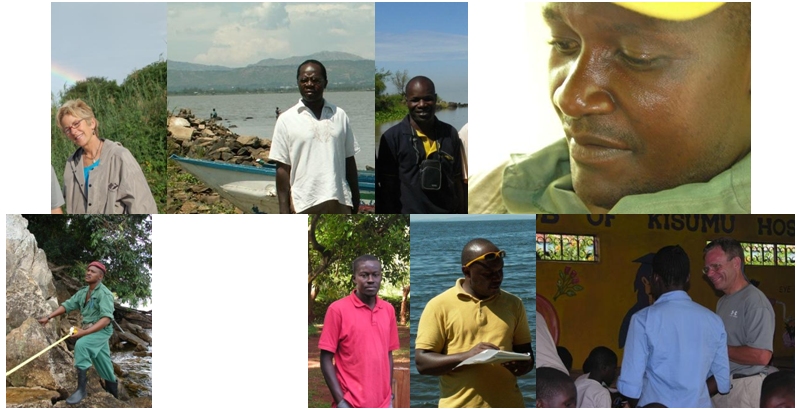
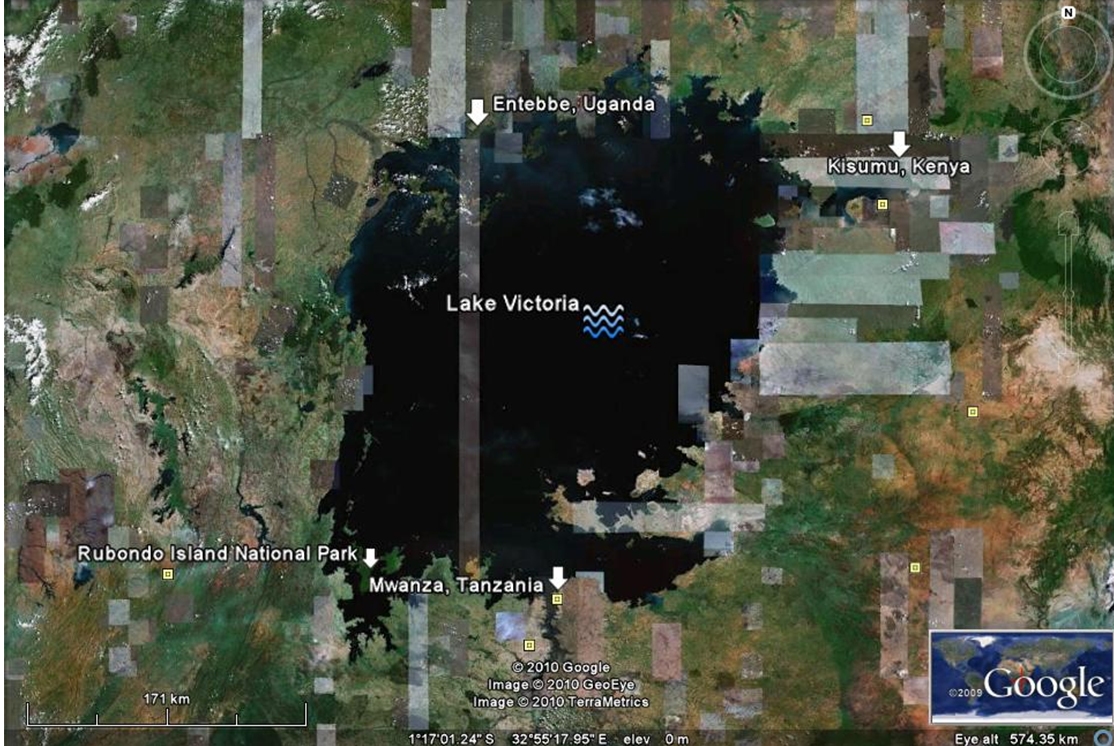
Over five years (2005-2009), we accumulated anecdotal information about traditional medicinal and consumptive uses of the spotted-necked otters (Lutra maculicollis) and mythology involving the species based on conversations with 100 residents (95 were males) living near Lake Victoria in portions of Kenya (60 residents; Kisumu area), Tanzania (30 residents; Rubondo Island National Park area, surrounding islands, and Mwanza area), and Uganda (10 residents; Entebbe area) (Figure 1). The intent of our report is to provide insight about the role of otters in some East African cultures and review potential impacts that anthropogenic use and attitudes may have on their populations. This preliminary information is presented as background for future more formal studies focused on otter-human interactions.
Traditional Medicinal Value of Otter
Otters were reported to be consumed, or portions of their skin worn, predominantly by men, to enhance virility. Knowledge of using the otter to enhance male-sexual prowess was mentioned by at least some of the residents from each of the communities where discussions took place. Overall, about 40 people reported being familiar with medicinal use of the otter to enhance virility; most of these were fishermen or otherwise those with jobs closely associated with Lake Victoria.
The presumed “sexual powers” of otters are thought to manifest themselves in various ways, ranging from general enhancement of a male’s sexual performance to making men become extremely attractive to women. The male is thought to be endowed with these benefits by eating the flesh (dried or cooked), drinking boiled blood, or wearing the skin of an otter.
A medicine man from Kisumu, Kenya told us otters are used in two ways. One of the methods consisted of consuming a “small” amount (he emphasized only a few bites) of otter flesh, and the other entailed wearing a small piece of pelt (described as a section about 2.5 x 2 cm) as a talisman. The talisman is attached to a string and then worn around the waist, next to the skin, as a belt. Both of these methods are described as endowing men with "super-human" sexual ability, making them highly attractive to women. The talisman is attributed with long-lasting “power”. The medicine man also indicated that eating too much of an otter will cause a man to develop chronic erectile problems that can become a health issue. This practitioner indicated that an otter carcass used to enhance virility will last him a long time (typically 1-2 years when used appropriately) because only a small amount is necessary to derive the supposed sexual benefits. However, we also heard stories of another medicine man (Muganza, Tanzania) obtaining one otter for each client. In this case, he would first have the client drink a soup made from the otter’s boiled blood. The meat is eaten 3 days later and the man is then provided with female companionship. We did not discern estimates of the specific duration for which a client derived enhanced sexual prowess following consumption of an otter. However, the sexual “power” derived from a talisman is considered to be permanent, can be transferred among users, and is therefore considered highly valuable and is closely guarded by the owner.
Consumption of otters as food
Historically, customs of some tribes living along Lake Victoria were reported to include a taboo against consuming otters in all assessed areas. We were unable to discern the basis of these taboos, but were told that in some cases there has been a lessening of this prohibition, leading to intentional hunting of otters for food and a willingness to consume otters accidentally drowned in fishing nets (i.e., gill nets). Also, other tribes living along Lake Victoria apparently have traditionally killed and eaten otters. Methods mentioned for hunting otters include the use of dogs, clubbing, catching in bags, and drugging with an alcoholic banana-based mash. The following summarizes descriptions provided by some residents about the processes involved for catching otters in bags and drugging them.
- Bag catching – This method of catching otters was reported to be performed by fishermen from the Aluru tribe (the correct spelling of the tribal name was unknown) that inhabit small islands in the northern portion of Lake Victoria (Uganda) and portions of Kenyan lake waters. These fishermen tell tales of being able to sneak up on sleeping otters and trap them in bags. Members of the tribe were said to eat the otter meat, which they consider to have a sweet taste, and use the skins to make bracelets, belts, and many other items of personal use. Fishermen from this tribe spend the majority of their time on the lake and are considered wildlife experts by residents of other tribes in nearby communities.
- Alcoholic banana-based mash – We heard of this practice from several Tanzanian residents living in the Rubondo Island National Park area. Fishermen are reported to spread the banana-based mash (the residual of locally brewed alcoholic beverages) on rocks along Lake Victoria for consumption by otters. The mash, referred to by some as machicha ya pombe in Kiswahili, is supposedly readily eaten by otters and, because it contains alcohol, causes them to become intoxicated. After becoming intoxicated otters were reported to be easily clubbed or caught in a net while in the water.
East African Otter Lore
During our conversations with residents we learned of various interesting beliefs regarding otters. For example, otters are perceived as being very sexual and three widespread beliefs are that they will: 1) rape both men and women, 2) "make love" to rocks, and 3) they will "make love" to almost anything. We suspect some of the sexual prowess attributed to otters relates to their tendency to rub the ventral surface of their body against the substrate while grooming (most visible when the rubbing takes place on rocks in or near the water), a motion that could be perceived as an attempt to copulate. Some fishermen from Uganda are reported to believe that otters eat the eyes from fish caught in their nets.
Human Uses of Otters - Potential Impact on Lake Victoria Populations
The anecdotal information we present provides little insight on the impact human consumption has on otters inhabiting Lake Victoria. The discriminate use of otters, such as that indicated by the medicine man in Kisumu would not seem to negatively impact on their populations. In fact, he emphasized the importance of using otters in a sustainable way. However, the use reported by Muganza’s medicine man, which requires one otter per person treated could be more problematic. We do not know the extent of this more intensive use of otters but, if widespread, this practice could potentially have an adverse impact on their populations. Similarly, we don't know the frequency at which otters are inadvertently caught in fishing nets or killed intentionally for food. Nonetheless, otters in Lake Victoria clearly are being killed by humans for various reasons and research is needed to better delineate the type and extent of human-induced mortality.
Résumé : Utilisations Et Traditions De Consommation De La Loutre À Cou Tâcheté En Afrique De L'est – Rapport Preliminaire Sur Le Lac Victoria Au Kenya, Tanzanie Et Ouganda
Nous avons compilé les informations relatives aux utilisations et aux traditions autour de la Loutre à cou tâcheté (Lutra maculicollis) fréquentant des zones du Lac Victoria. Les données proviennent de discussions menées entre 2005 et 2009 avec 100 résidents vivant dans les communautés adjacentes au Lac à la fois au Kenya, en Ouganda et en Tanzanie. Nos résultats sont totalement anecdotiques néanmoins, nos informateurs nous ont indiqué que des parties de loutres sont consommées ou portées pour améliorer la virilité mais elles sont aussi tuées pour l'alimentation. Nous ne savons pas dans quelles mesures les loutres sont tuées à ces fins c'est pourquoi une enquête plus approfondie serait nécessaire pour établir son impact potentiel sur les populations.
Revenez au dessus
Resumen: Usos y Conocimiento Tradicional Derivado de la Nutria de Cuello Manchado en Africa del Este – Reporte Preliminar del Area del Lago Victoria en Kenya, Tanzania y Uganda.
Hemos compilado información hacerca de los usos y el conocimiento tradicional derivado de la nutria de cuello manchado (Lutra maculicollis) que habita en algunas porciones del Lago Victoria. La información fue basada en discusiones conducidas durante el período comprendido entre 2005 y 2009 con aproximadamente 100 residentes que habitan las comunidades adyacentes al Lago Victoria en Kenya, Uganda y Tanzania. Nuestra información es completamente anecdótica, pero los residentes indicaron el uso de alguans porciones de la nutria como afrodisíaco así como alimento. No conocemos la extensión en que las nutrias están siendo sacrificadas para tales fines e investigación adicional es necesaria para elucidar el impacto de estas actividades sobre las poblaciones de nutrias en el área.
Vuelva a la tapa